Thailand ATM Fees: 220 Baht Every Time, and How to Cut the Real Cost of Cash
Thai ATMs charge about 220 THB per foreign card withdrawal, some now show 250 or 350 THB. Here is what that costs and how to pay it less often.
Published . Updated . 6 min read.
Most Thai bank ATMs charge a flat ATM fee of about 220 THB every time you withdraw with a foreign card, and in 2026 some machines display 250 THB for Visa and up to 350 THB for Mastercard. The fee is set per withdrawal, not per baht, so the way to pay less is to withdraw less often, decline the conversion offer and use a card that adds nothing on top.
This guide covers the fee itself, the cheapest machines, the conversion button, what Wise does and does not solve, and what changes on an island like Koh Tao. Every figure below carries its source and date.
How much is the ATM fee in Thailand for foreign cards?
The standard fee is about 220 THB per withdrawal on a foreign card at major Thai banks. The Chiang Rai Times guide, last updated on 5 September 2026, gives 220 THB for most major bank ATMs. ThailandKnowledge, last verified in June 2026, lists the same 220 THB at Bangkok Bank, Krungsri, SCB, Kasikorn, Krungthai and the Government Savings Bank.
Your own bank may add its fee on top. That part depends entirely on your card, so check your issuer's tariff before you fly.
Limits per withdrawal vary by bank. The Chiang Rai Times gives these ranges for foreign cards:
| Bank | Typical limit per withdrawal |
|---|---|
| Bangkok Bank | 20,000 to 25,000 THB |
| SCB | 20,000 to 25,000 THB |
| Kasikorn (KBank) | 20,000 to 30,000 THB |
| Krungsri | up to 30,000 THB |
Why do some Thai ATMs show 250 or 350 baht?
Some banks now charge more depending on the card network, so the number on screen is the one that counts. Portail Asie, in a guide dated 14 June 2026, reports that some Thai banks charge 250 THB with Visa and up to 350 THB with Mastercard, and that Krungsri and Kasikorn list different amounts by network in their 2026 schedules.
The practical rule is simple. The machine shows the fee before it pays out. Read it every time, and cancel if it is higher than you expected.
Which ATM is cheapest in Thailand?
AEON ATMs are the cheapest widely reported option, at around 150 THB per foreign card withdrawal according to both the Chiang Rai Times and ThailandKnowledge (2026). That saves about 70 THB against the standard fee. AEON machines sit mostly in cities and shopping centres, so on small islands you will often have no AEON to choose.
Among the big banks, the fee is mostly the same, so the cheapest machine is the one with the highest limit per withdrawal. Krungsri, at up to 30,000 THB, is the usual pick.
How do you avoid Thailand ATM fees?
You cannot remove the fee at a Thai machine with a foreign card, but you can shrink it by withdrawing the maximum each time. Because the fee is flat, its share falls as the amount rises. The table below is our own arithmetic on the fees reported above.
| Withdrawal | Fee at 220 THB | Fee at 250 THB | Fee at 350 THB |
|---|---|---|---|
| 5,000 THB | 4.4 percent | 5.0 percent | 7.0 percent |
| 10,000 THB | 2.2 percent | 2.5 percent | 3.5 percent |
| 20,000 THB | 1.1 percent | 1.25 percent | 1.75 percent |
| 30,000 THB | 0.73 percent | 0.83 percent | 1.17 percent |
Someone who takes out 5,000 THB twice a week pays about 1,760 THB a month in machine fees at 220 THB. Taking out 30,000 THB once or twice a month covers a similar amount of cash for 220 to 440 THB.
The routine we recommend:
- Withdraw close to the machine limit, once or twice a month, from a bank's own ATM.
- Read the fee on the screen before you confirm.
- Decline the conversion offer, every time.
- Pay rent, coworking and larger bills by bank transfer where the business accepts it.
- Keep a cash reserve at home for days when you cannot reach a machine.
Opening a Thai bank account removes the foreign card fee altogether, as ThailandKnowledge notes, but the account comes with its own paperwork and visa conditions.
What the conversion button costs on one withdrawal
Choose without conversion, and let your own card issuer convert the baht. When you accept, the ATM operator sets the exchange rate, and the Chiang Rai Times warns that this rate often includes a markup. ThailandKnowledge puts the markup of dynamic currency conversion at roughly 3 to 7 percent (June 2026).
On a 20,000 THB withdrawal, that is 600 to 1,400 THB lost on top of the machine fee. At the XE reference rate of about 38 THB to the euro in late September 2026, that is roughly EUR 16 to 37 for pressing one button. Our answer on choosing with or without conversion at a Thai ATM walks through the full arithmetic.
Does the Wise card avoid Thai ATM withdrawal fees?
No. Wise lowers what your own side charges, but the Thai machine fee still applies. The Wise pricing page for UK cards, checked on 25 September 2026, gives up to 250 GBP of free ATM withdrawals a month and 2.69 percent on the amount above that, and states that some ATM providers may charge additional fees. Allowances differ by the country your account is registered in, so check your own Wise pricing page.
There is a 2026 change for Wise accounts registered to a Thai address. The Wise Help Centre says those cards are cancelled by September 2026 with a free replacement, and Thailand based cardholders cannot withdraw cash from ATMs inside Thailand. The same accounts gain PromptPay QR payments. If your Wise account is registered in Portugal, Germany or the UK, this change does not apply to you.
Is it better to exchange cash or use an ATM in Thailand?
Exchanging cash is often cheaper if you arrive with clean, widely traded notes. The Chiang Rai Times (September 2026) says cash exchange can work well if you carry US dollars, euros or British pounds. An exchange booth charges no flat machine fee, so a large exchange avoids the 220 THB entirely. The trade off is carrying a lot of cash on the way in. Many nomads use both: bring a first stack of euros or dollars, then use the ATM routine above for the months after.
Our currency check tool shows the mid market rate, so you can compare a booth's board before you hand over notes.
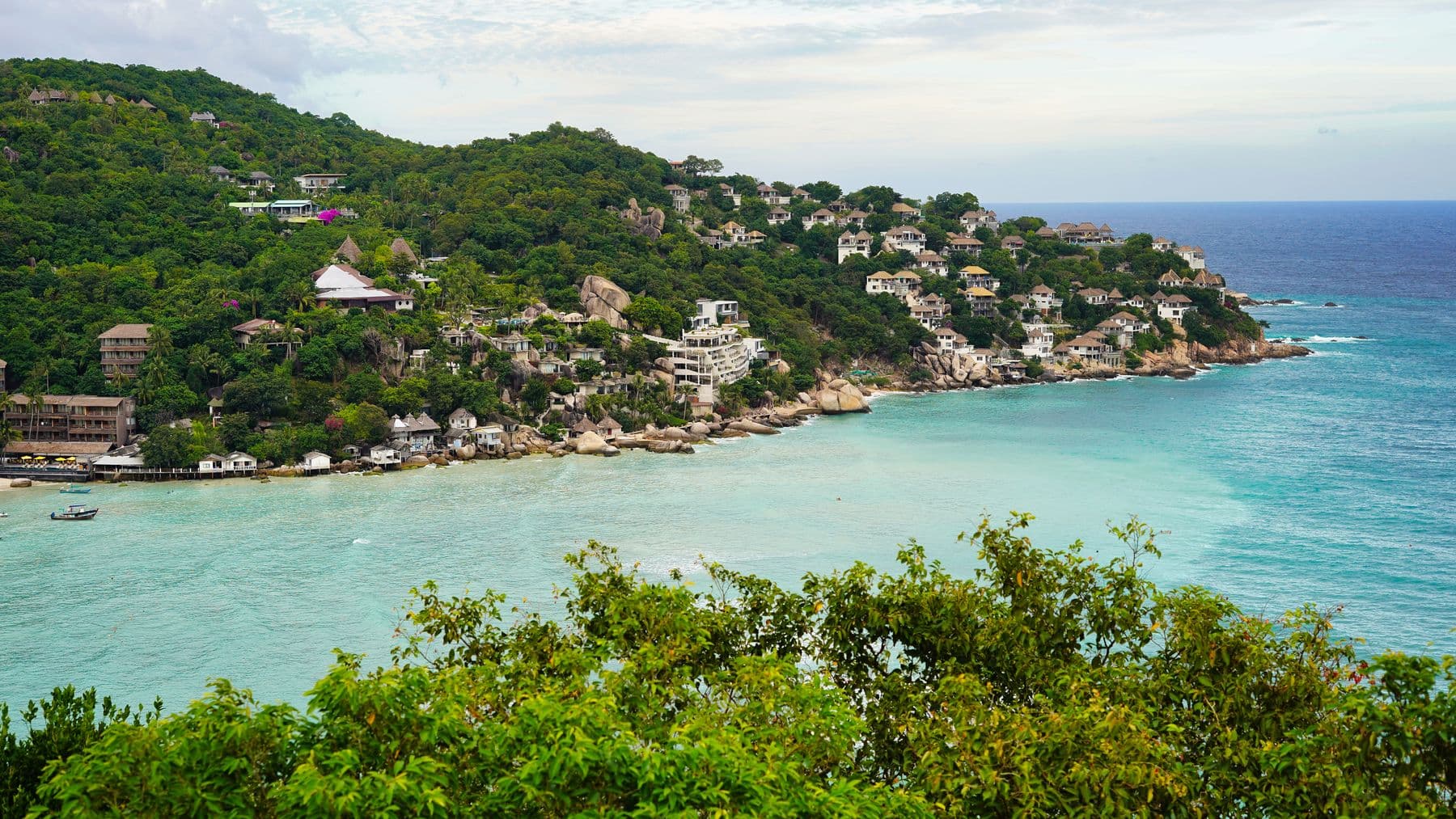
What about cash on Koh Tao?
On Koh Tao, cash matters more because card payments usually cost extra. The Koh Tao Complete Guide (undated page, reviewed 25 September 2026) says almost all resorts, dive schools, large restaurants and supermarkets take cards but add a 3 or 4 percent service charge.
ATM coverage is uneven. According to BAANLYY's Koh Tao banking guide (undated page, reviewed 25 September 2026), full bank branches (KBank, SCB and a smaller Bangkok Bank counter) are only in Mae Haad, Sairee has several ATMs, Chalok Baan Kao has a handful, and the east coast bays have little to no coverage. Withdraw before you leave Mae Haad or Sairee. A power cut also takes the machines down, which we cover in what a power cut on Koh Tao costs a remote worker. For a full monthly budget, see what we spent in a month on Koh Tao.
Do ATM withdrawals count as remitting income for Thai tax?
There is no clear answer yet. Expat Tax Thailand notes that published Revenue Department guidance does not clearly state that every foreign card payment or ATM withdrawal is a remittance, and it advises keeping records of how the spending was funded. If you stay 180 days or more in a calendar year, read the Thai remittance tax post and talk to a Thai tax adviser.
Updated on 25 September 2026. Rules and prices change: confirm with the official source linked above before you act.
Frequently asked questions
How much is the ATM fee in Thailand for a foreign card?
Most major Thai bank ATMs charge about 220 THB per foreign card withdrawal, according to guides updated in 2026. Some machines now display 250 THB for Visa and up to 350 THB for Mastercard. AEON ATMs charge around 150 THB. Your own bank may add its fee on top, so read the screen and your card tariff before confirming.
Which bank has the cheapest ATM fee in Thailand?
AEON is the cheapest widely reported option, at around 150 THB per foreign card withdrawal in 2026. The big banks mostly charge the same 220 THB, so among them the best choice is the one with the highest limit per withdrawal, such as Krungsri at up to 30,000 THB. Fewer, larger withdrawals cut the cost more than switching banks.
What does accepting conversion cost on a 20,000 THB withdrawal?
Always choose without conversion. Accepting lets the ATM operator set the exchange rate, which reports put at a markup of roughly 3 to 7 percent. On a 20,000 THB withdrawal that is 600 to 1,400 THB extra, on top of the machine fee. Let your own card issuer convert the baht instead.
Does Wise avoid the 220 baht ATM fee in Thailand?
No. The Thai ATM operator fee still applies with a Wise card. Wise only removes its own fee up to a monthly allowance, which on a UK card is 250 GBP a month, with 2.69 percent charged above that. Wise cards on accounts registered to a Thai address can no longer withdraw from ATMs inside Thailand in 2026.
Is it cheaper to exchange cash or use an ATM in Thailand?
Exchanging clean euros, dollars or pounds is often cheaper, because exchange booths charge no flat 220 THB fee. The cost is carrying a large amount of cash on arrival. Many long stay visitors bring a first stack of notes, then withdraw near the machine limit once or twice a month and always decline conversion.
Sources
- Chiang Rai Times, Thai ATM fees for foreign cards (220 THB standard, AEON around 150 THB, limits by bank, cash exchange), updated 5 September 2026, accessed .
- Portail Asie, withdraw money in Thailand: ATM fees 2026 (250 THB with Visa, up to 350 THB with Mastercard), 14 June 2026, accessed .
- ThailandKnowledge, Thailand ATM fees by bank (220 THB by bank, AEON 150 THB, dynamic currency conversion markup of 3 to 7 percent), verified June 2026, accessed .
- Wise, card fees (United Kingdom): 250 GBP a month of free ATM withdrawals, then 2.69 percent, accessed .
- Wise Help Centre, upcoming changes to your Wise account in Thailand (Thai registered accounts, card cancellation, no ATM withdrawals in Thailand, PromptPay), accessed .
- BAANLYY, Koh Tao banking (branches in Mae Haad, ATM coverage by bay), undated page, reviewed 25 September 2026, accessed .
- Koh Tao Complete Guide, hospital, offices and services (card service charge of 3 or 4 percent), undated page, reviewed 25 September 2026, accessed .
- Expat Tax Thailand, assessable foreign sourced income (no clear published position on card withdrawals as remittance), accessed .
- XE, EUR to THB reference rate (about 38.07 THB to the euro, late September 2026), accessed .